stomaselli

At Home in the Unheimlich
DeborahLevy

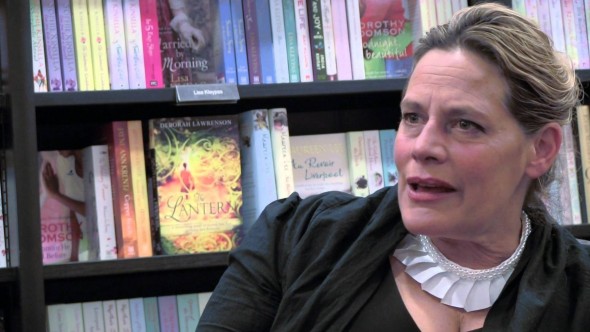
Deborah Levy interviewed by Andrew Gallix.

Andrew Gallix: I wonder if the discovery of your ‘own voice’ isn’t also due to the adoption of a less theatrical style. Were you more influenced, in the early days, by your playwriting? Many people who discovered you when Swimming Home was shortlisted for the Man Booker, in 2012, had no idea that you had been a successful playwright for many years: did this give you the feeling that you were starting over again as a fiction writer?

Deborah Levy: Yes, I trained as a playwright. Oddly, my two favourite plays written in the 1990s, The B File (an erotic interrogation of five female personas that has been performed all over the world) and Honey Baby: 13 Studies in Exile (performed at La Mama Theatre in Melbourne) are not theatrical at all. Read those plays (Deborah Levy: Plays 1, Methuen) and you will see I’m starting to slip into prose. I can’t begin to convey how hard it was to be a female playwright in the mid-1980s, writing in the way that I did — yes, the whole gender thing — but mostly because I wasn’t writing social realism which was very much in vogue, nor was I writing didactic feminist theatre which was also having a moment at that time. I was much more influenced by Pina Bausch and Heiner Müller than anyone else, though Pinter and Beckett were influences too. Writing for the theatre taught me to embody ideas.
Selfie

image

By Paula McGrath.

I have not gone near his shed since that first time. He’ll be in when he’s in. In the cottage, he has arranged rolled newspapers neatly in the hearth, and twigs. All I have to do is strike a match. It roars into flame. I make a wigwam of turf around it, then I pour vodka into a tumbler and sip at it while I wait. When he comes in I pour another and hand it to him. He knocks it back and returns the plastic tumbler to the table with a down-to-business bump.

–Are you ready?

He gets busy now, plugging in a radiator, clicking on a Superser I haven’t seen before. I’m warmed by the vodka and pleased at his thoughtfulness. Rachel and Claire never see this side of Aids, Aidan, I correct. He’s setting up lights, transforming the cottage into a movie set. I take off my clothes.

The Eye & the Word

image
By Joanna Walsh.

The eighteenth century philosopher, Johann Georg Hamann, whose double nns stagger through Heidegger’s essay, ‘Language’ (in Poetry, Language, Thought) is, ‘still waiting for the angel with the key to this abyss.’ The abyss, says Heidegger, is something that opens when Hamann asks, ‘how do I know reason from language?’ (or maybe he’s asking, ‘why is one like the other?’). Even sitting in front of my screen, folded into this thing with hands on that perhaps contains what I have to say (or maybe it doesn’t), I can see there are some problems here. Since when did an abyss have a key, so that it can be locked and unlocked? Surely Hamann should have waited for something more practical, like a writing desk, which he could have stood on to climb out of the abyss, if it wasn’t too deep, or which, with the help of a handsaw, he could have made into something that functioned as a ladder, or a bridge. Or maybe he should have asked for the help of a hawk or a raven which, if he had been very light, or if they were very big, might, like the chicken, have been able to get him to the other side. Instead, he waits hopelessly for something that will unlock the rock door of his very solid prison.