Literature

Non-creative writing
GeoffDyer

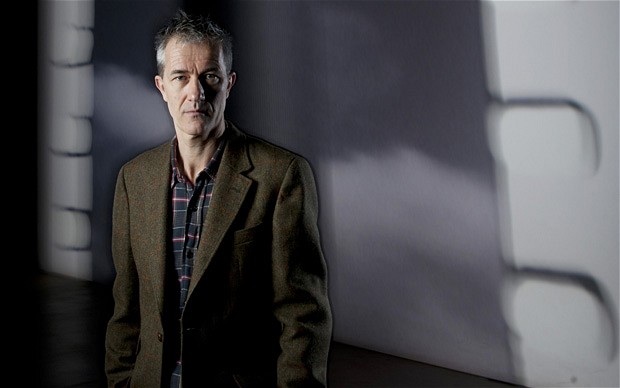
Geoff Dyer’s Art of Nonfiction Paris Review interview.

My motto is always, “If you’re not overprepared you’re underprepared.” I’m a grammar-school boy, I do my homework. Likewise, in the fiction, so much of the stuff is drawn from real life. But that’s not the point really. The point is that the techniques are pretty much the same in fiction and nonfiction. It’s not like Susan Sontag, where there’s an easily recognizable division between the two. Sontag was always saying, Why don’t you adequately acknowledge the greatness of my fiction? Well, there are several possible responses to that, but the important thing is that she accepted a separation that I reject. It’s just a bunch of books. To go back to your earlier question, I think the distinction between fiction and nonfiction is less about “Did it really happen or was it made up?” than it is about form. And, more than form, it’s about the expectations that are brought to certain forms. According to how a book is presented, packaged, or identified, readers have certain expectations. Following from that they expect books within broadly identified categories to behave in certain ways. So people can find it quite disconcerting when a book isn’t doing what they think it’s meant to be doing, even if the book is completely fine on its own terms and has no desire to conform to some external set of expectations. My books are often disappointing in that regard. Maybe in other ways, too, but I am mercifully and necessarily oblivious on that score.

All the way to Reno

RachelKushner

Brilliant interview with Rachel Kushner in Guernica. Discussed: register, range, realism, Roberto Bolaño, violent histories, Proust, Robert Altman, sentences.

There is no single formula. An invisible integument that gives the sentence wholeness and musicality, sometimes. But other times, the formula is almost purely one of context. And yet other times, of sheer precision of meaning.

Romance

image

By Rimbaud.

I

You’re not serious, when you’re seventeen.
– One fine evening, tired of beers and lemonade,
The noisy cafés with their dazzling gleam!
– You walk the lime-trees’ green on the Parade.

The lime-trees smell so fine on fine June evenings!
The air’s so sweet sometimes you close your eyes:
The wind is full of sounds – the town’s nearby –
Blows the smell of beer, and the scent of vines…

Talent for humiliation

KOK

Karl Ove Knausgård sets up ‘Come Together,’ his New Yorker short story (adapted from My Struggle: Book Three: Boyhood).

When it comes to memories of that iconic type, memories that are burned into you, I have maybe ten or so from my childhood. I’m a bad rememberer of situations. I forget almost everything as soon as it happens. But when it comes to landscapes and rooms, it’s different. I think I remember every single room that I have been in from the age of seven.

Meandering presences

AfterSebald

Slate on Sebald’s A Place in the Country.

Whenever I read the work of the late German writer W.G. Sebald, I get distracted here and there by a preoccupation with the fact that he worked for most of his life as an academic. Probably this is because I’ve spent many of my years in a similar environment, and I often wonder about the formative pressures this has exerted, over time, on my own writing and thinking. His relationship with the academy was not that of the standard contemporary writer, who is typically housed within the disciplinary annex of “creative writing” and who does not concern himself with the business of academia per se. Sebald, although he did also teach creative writing, was a full-blown scholar, a company man of long standing who lectured in the department of German literature at the University of East Anglia from 1970 until his death in 2001. In ways that are both subtle and pronounced, this shows through in his writing — in his essays and novels (which he preferred to call his “prose narratives”).