stomaselli

Writing from Oulipo

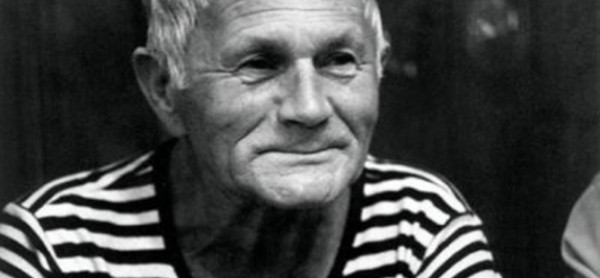
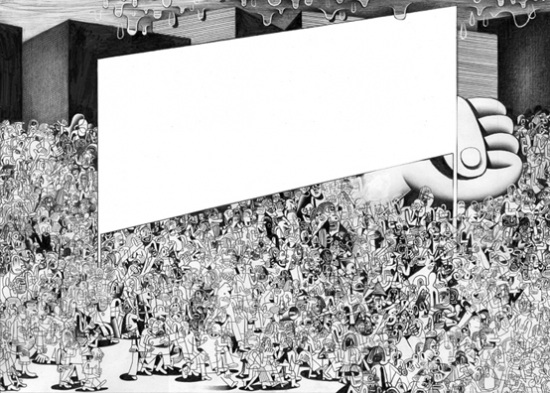
Killoffer

December’s Words Without Borders is an Oulipian special. Daniel Levin Becker introduces the issue:

The Oulipo — ouvroir de littérature potentielle, or workshop for potential literature, a Paris-based literary collective dedicated to exploring how literature might arise from structures, rules, and constraints borrowed from linguistics or mathematics or parlor games — presents an uncommonly acute challenge to that expectation. To write an Oulipian text is both to draw a picture and to solve a puzzle, and more often than not these two missions blur together to the point where it becomes impossible to discern where the language ends and the meaning, such as it is, begins.
The Quarterly Conversation

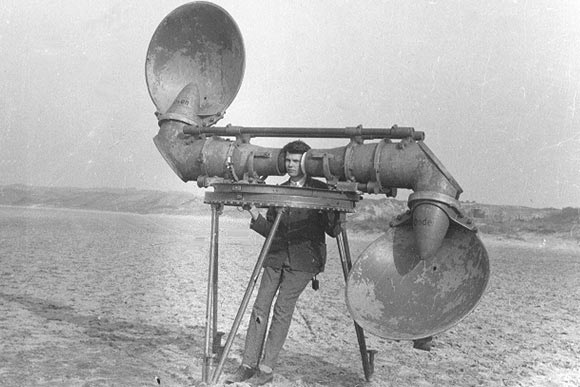
VintageListeningDevice

The Quarterly Conversation never disappoints. This issue has essays on the art of disturbance in the novels of James Purdy, Dalkey Archive’s Library of Korea series and Simon Leys, an interview with Mircea Cărtărescu, plus David Winters talks to Chrisitne Schutt.

CS: “’Reality,’ of course, is man’s most powerful illusion; but while he attends to this world, it must outbalance the total enigma of being in it at all.” So says Erik H. Erikson, but reality does not for me “outbalance” the bewildering experience of being in the world. Add the scrim of memory and incessant excursions into the past, and the most I can do to construct a world is to stitch together sensations of it. I do not want an impenetrable style but prize compression and music. I abhor quotidian easy speak, psychobabble, brands, news and slogans—a “writer’s prose” as Gordon Lish once described it. Mine calls for close, hard readers of fiction. This year in reviews of Prosperous Friends, I was bumped up from being a writer’s writer to being a writer’s writer’s writer; either way, it cautions challenging prose ahead. A lot is left unsaid and must be inferred simply because I want to avoid the dulling effect of belated language.

New York palette

SaulLeitrerTaxi

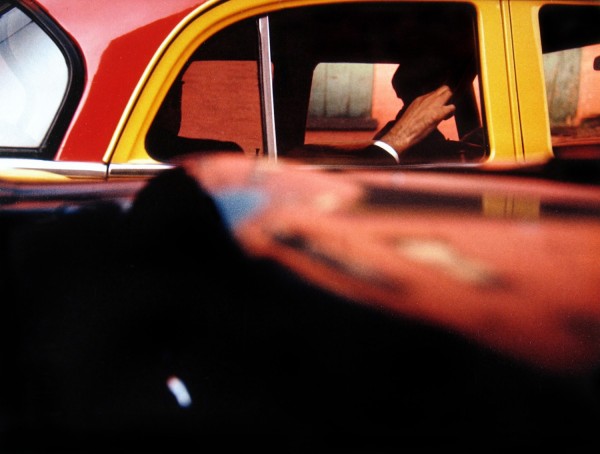
Teju Cole pays tribute to Saul Leiter.

Undoubtedly, the charm of some of Leiter’s pictures lies in the fact that they depict fifties places, fifties cars, and fifties people (we rarely dress so well today), and that the analog reds and greens are more moving, somehow, than what our own digital cameras or streetscapes can offer up. But pictures such as “Through Boards” (1957), “Canopy” (1958), and “Walking With Soames” (1958) would be winners in any era. They are high points of lyric photography which, once seen, become — like all the best pictures and poems and paintings — a permanent part of our lives.

Wine dark sparks

BohumilHrabal

‘How to Guzzle Books Like Wine’, Tom Jokinen on Jonathan Franzen, e-books, and Bohumil Hrabal‘s Too Loud A Solitude.

A read book is permanent, even if some of the details disappear with. I’ve read Emma but can’t remember much about it except that everyone has a governess and sews. But if my own work-in-progress concept of empathy is based on a lifetime of misunderstanding other people, it’s also been informed, just a tick, by Emma and the other novels which dramatize the folly of vanity. The details are gone but the ideas remain. Franzen is wrong: books are defined not by format but by the vagaries of art, through which something mystical sneaks into the reader’s mindand then won’t go away.

No style is a style

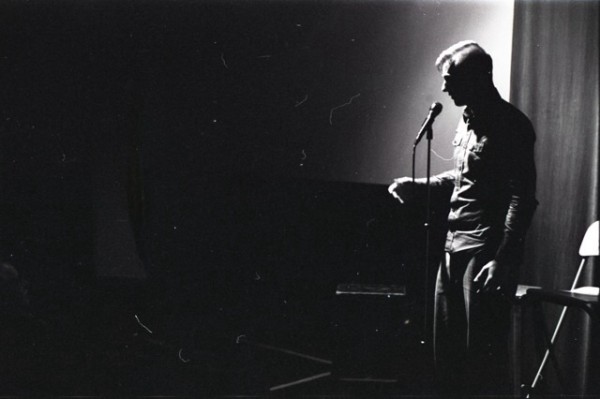
SJFowler

S.J. Fowler, author of Enemies, vanguardist and bright spark behind 3:AM Magazine‘s Maintenant! poetry series, is delivering a series of short lectures at the Rest is Noise Festival. So far, B.S. Johnson, Thomas Bernhard, and New York Dada and ethics. All great audio essays, but we want to give particular mention to ‘The occluded: British avant garde poetry in the era of Britten’ [below], which discusses David Gascoyne, Michael Horovitz, Bill Griffiths, Iain Sinclair, Allen Fisher and Bob Cobbing, amongst others. S.J. Fowler contributes six new poems to gorse #1.