
stomaselli

A dissatisfaction

TimParks

Tim Parks is trapped inside the novel.

I wonder how many people share the experience described by David Shields in Reality Hunger, of tackling some large novel, a work essentially conventional in its structure and brand of realism, that weaves together the lives of its characters over a number of years, and simply feeling that the whole exercise has become largely irrelevant. Shields doesn’t present his remarks as a criticism of writers — the name he mentions is Jonathan Franzen — pursuing the tradition of the long realistic novel. Rather, he suggests it is a change in himself, something he believes has been brought about by the utterly changed nature of contemporary life. He considers the variety of electronic media — the proliferation and abbreviation of all forms of messages, the circumstances created by the ever more rapid transit and greater abundance of information, the emergence of a powerful virtual world that becomes more real to us all the time — and he concludes that given this way of life it is hard for the traditional kind of novel to hold our attention. He then looks at a variety of texts that, unlike the traditional novel, weld together chunks of “reality,” pieces of documentary taken from elsewhere, quotations, fragments, provocations, moments of lyricism, and melodrama, perhaps from film or television, newspapers or websites, to create an entirely different reading experience.

Reframing art

DavidShields

David Shields on originality (what else) in The White Review.

Originally, feathers evolved to retain heat; later, they were repurposed for a means of flight. No one ever accuses the descendants of ancient birds of plagiarism for taking heat-retaining feathers and modifying them into wings for flight. In our current system, the original feathers would be copyrighted, and upstart birds would get sued for stealing the feathers for a different use. Almost all famous discoveries (by Darwin, Edison, Einstein, et al.) were not lightning-bolt epiphanies but were built slowly over time and heavily dependent on the intellectual superstructure of what had come before them. E.g., the commonplace book was popular among English intellectuals in the seventeenth-nineteenth centuries. These notebooks were a depository for thoughts and quotes and were usually categorised by topic. Enquire Within Upon Everything, a commercially successful parody of the commonplace book, was published in London in 1890. There’s no such thing as originality. Invention and innovation grow out of networks of people and ideas. All life on earth (and by extension, technology) is built upon appropriation and reuse of the pre-existing.

The anti-canon

DaniilKharms

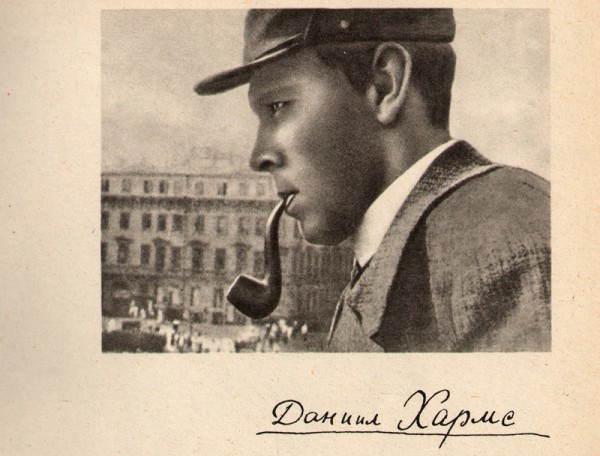
Influx Press have a nice feature on their blog, The Anti-Canon, a “collection of short essays focusing on writers less well known, positioned outside of the literary mainstream or simply deserving of more attention”. A little like Writers No One Reads, another series after our own hearts. The brilliant Daniil Kharms makes Influx’s list.

A few months before 36 year old outlaw writer Daniil Kharms starves to death in a psychiatric prison in 1942, a German bomb hits a block of flats during the siege of Leningrad. One side of the block is destroyed. On the other side, windows implode. Inside one of those shattered apartments. Kharms’ second wife, Marina Malich and philosopher Yakuc Drukin frantically gather up his papers and notebooks. These fragments floating through the bomb blasted air are his collected works. They’re what’s left of him.

Wanted: reviewer for Iosi Havilio

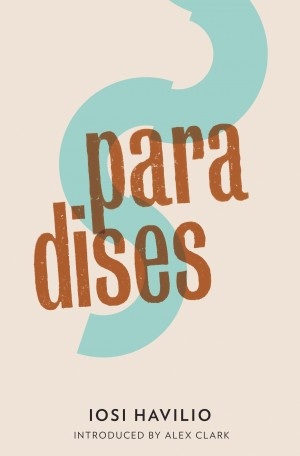
ParadisesHavilio

We’re looking someone to review Paradises by Iosi Havilio (published by And Other Stories), for gorse online. We can’t pay a fortune, but there is a small fee for reviews. If interested, please get in touch: info[at]gorse[dot]ie. We have a reviewer.

From an interview with Iosi Havilio:

Do you believe in Ricardo’s Piglia’s assertion that “All great literature is political”?

Of course, either by action or by omission. In fact I believe that the best political literature is the one that doesn’t speak of politics. Just as the best love stories don’t need to speak about sentiments.

The story

image

We’re working away on the first print issue of gorse, and we’ll announce its contents (and ways you can support us) very, very soon. We think, though, it’ll do no harm to give you a taster of what we’ve got in so far: interviews with Evan Lavender-Smith and Adam Thirlwell, essays on Houellebecq and how ancient Modernism is, fiction from Desmond Hogan, Julie Reverb and Matthew Jakubowski, and poems by S.J. Fowler. We’ve also lined up an interview with a young Irish artist; essays on writing about horror for a living, on running through Paris, on Cartier-Bresson’s artist portraits, on the films of Nic Roeg; fiction from an Irish artist and writer based in Berlin; and a comic by a very talented illustrator living in Paris. We’re pretty excited and hope you are too.