stomaselli

Laughter in the dark

KevinBarry

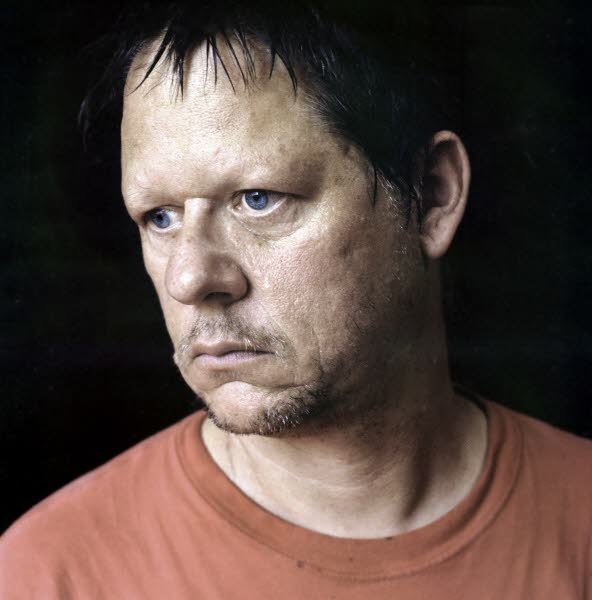
Kevin Barry on the Paris Review blog.

For a long time I was trying to be the next great Jewish American writer. You know, the next Saul Bellow or Philip Roth. This was in Cork city, Ireland. As a pale ginger twenty-something. It wasn’t working out all that well, but I do think you have to write out your influences.

I’ve never agreed with this idea that a writer “finds his voice” and then just sticks with it and drones on in that voice for forty years. That sounds like death to me. I tend to let the story dictate the style. Back then, I let my idea of what a great writer sounds like dictate my style. I wrote these great sententious sentences, clause after clause after clause, under a black belly of fucking cloud, and I’d end up thinking, “What is this? Who wrote this? Who is this guy?” It certainly wasn’t me.

[Via @nemoloris]
NotFilm

BusterKeaton

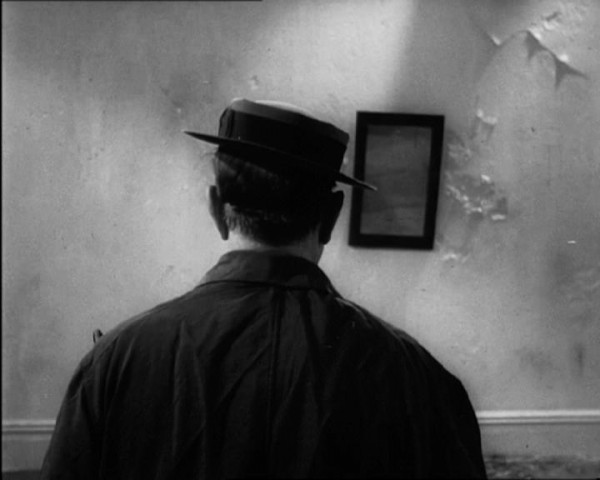
New documentary on Samuel Beckett‘s Film.

In 1964 author Samuel Beckett set out on his only journey to America, to undertake one of the strangest ventures in cinematic history: his collaboration with silent era genius Buster Keaton on a short, almost-silent avant-garde film. The production FILM BY SAMUEL BECKETT, was beset with trouble from the start. The entire first scene was unhappily eliminated, and Keaton suffered terribly in the hottest days of a blistering Manhattan summer. The soon-to-be Nobel laureate Beckett never saw eye-to-eye with the legendary slapstick star, and the film they made – along with theater director Alan Schneider, renegade publisher Barney Rosset, and Academy Award-winning cinematographer Boris Kaufman – opened at the Venice and New York Film Festivals to a bewildered reception. In the decades since, it’s been the subject of praise, condemnation, and ongoing controversy. Yet the eclectic participants are just one part of a story that stretches back to the very birth of cinema, and spreads out to our understanding of human consciousness itself.

Life & empathy

WilliamVollmann

Newsweek interview the mighty William Vollmann.

If William T. Vollmann ever wins the Nobel Prize in Literature – as many speculate he will – he knows exactly what he will do with the $1.1 million pot the Swedes attach to the award. “It will be fun to give some to prostitutes,” he says, sitting on his futon, chuckling, a half-empty bottle of pretty good bourbon between us.

Alternative Ulster

ForrestReid

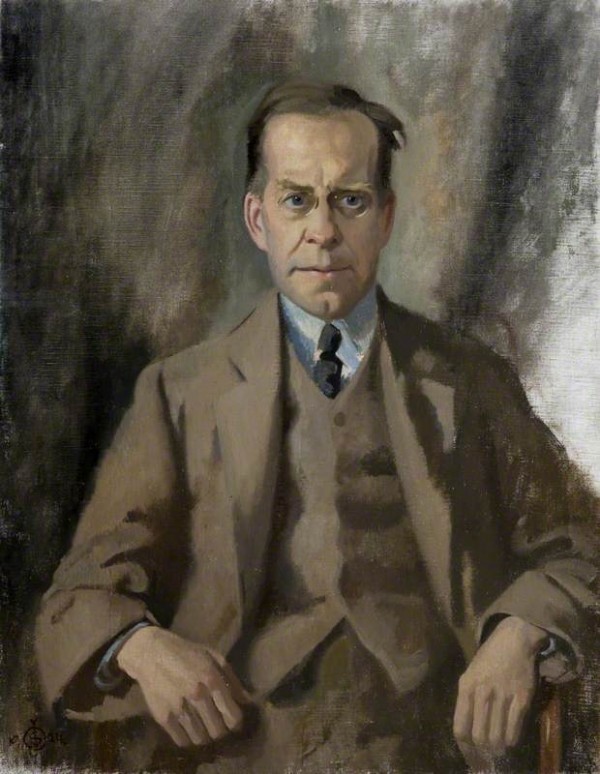
Forrest Reid, the ‘Marcel Proust of Ormiston Crescent’.

The twentieth century literature of northern Ireland was substantially and understandably dominated by one subject matter, namely the formal invention in 1922 of ‘Northern Ireland’, and the various forceful consequences of same. For that reason it has perhaps been too easy to hold a writer such as Forrest Reid (1875-1947) in a marginal regard. And yet this is a character to whom E.M. Forster once referred as ‘the most important man in Belfast.’

Reid’s published writing life straddled the partition of Ireland, and so to some extent he may have been rather overlooked in a melee; but more importantly he was a man out of time. Though in a sense he never left Belfast (other than for his studies at Cambridge) and made home for most his life at 13 Ormiston Crescent, his inner universe was intensely fired by the spirit and aesthetics of ancient Greece, and through his mind’s eye he transformed the landscape of Ulster into a sort of Arcadia.

Proust on film

TimeRegained

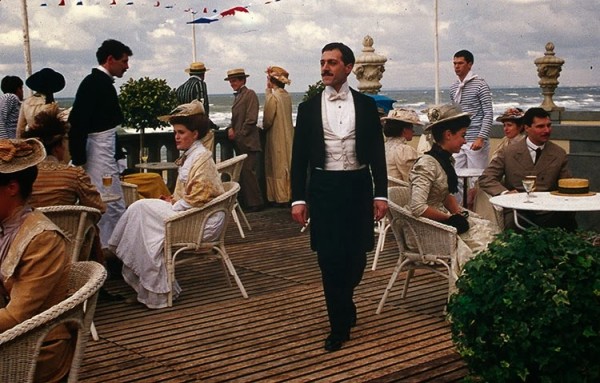
Peter Bradshaw on the cinematic outings of À La Recherche du Temps Perdu.

In the 1970s, it was the turn of Losey, who in a similar way had to drop his plans for the whole thing when funds dried up. But his À La Recherche du Temps Perdu (1972) is a great lost film, or ghost film, or imaginary film, because in 1978 Harold Pinter published the screenplay Losey commissioned from him, and it is fascinating to read this while attempting to “play” the movie in your head. The running time was estimated at just under four hours, which is about the reading time. Perhaps all directors should create an unproduced project like the Losey/Pinter Proust, a DIY film that viewers must conjure up for themselves.

Pinter’s Proust screenplay is a bold, radical compression or distillation: all the textual richness and amplitude is boiled away, and we are left with an audacious repatterning, a series of stark, fragmentary glimpses. It is a brilliant and very Pinteresque reading of Proust, with a real passion for the work. David Caute’s biography of Losey amusingly quotes one derisive non-backer: “This is the age of Gene Hackman and Barbra Streisand. There are no roles for them here.” Actually, given John Malkovich’s great success in Ruiz’s Time Regained as the cantankerous sensualist and snob Baron de Charlus, I’m not so sure; Hackman might have made a good, fussy Dr Cottard.