stomaselli

Language tricks

image

Adam Thirlwell on Sigizmund Krzhizhanovsky.

Krzhizhanovsky’s fiction is based on the fact that language makes things possible that are not possible in reality. If there is a word for “role” and a word for “character,” then naturally, it follows, according to this method, that the two could possess separate existences. Or, to put this maybe more precisely, he investigated whether the distinction between what is possible in language and reality is even tenable at all. And so the central mechanism of this writing is metaphor (“a three-by-four-inch slip of paper torn out of the notebook had miraculously turned into lodgings measuring one hundred square feet”) — the hinge between animate and inanimate objects, which allows figures of speech to acquire a strange kind of life.

While this attention to the act of writing could, I suppose, be defined as metafiction, Krzhizhanovsky’s real subject is not the gap between fiction and reality so much as the gaps inside the real itself. The metafiction is really metaphysical. So that it should be no surprise if a corpse, in “Autobiography of a Corpse,” reasons in this manner, arguing that space “is absurdly vast and has expanded — with its orbits, stars and yawning parabolas — to infinity. But if one tucks it inside numbers and meanings, it will easily fit on two or three bookshelves.” It is just one more example of Krzhizhanovsky’s exploration of language’s tricks.
Landscapes of omissions

Cezanne

Colm Toíbín on the letters of Cézanne.

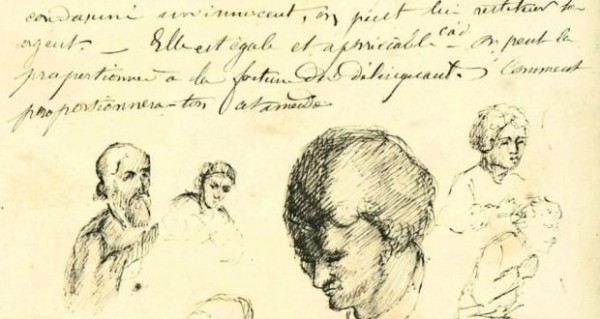
What emerges from Cézanne’s letters more than anything is his determination, his solitude, his seriousness and his eccentricity. Even though his work was being rejected by the Salon and mocked by the locals, he slowly built a reputation among dealers and critics. None of this seems to have bothered him much. In general he stayed in Provence, becoming a sort of legend in Paris. Danchev includes an extract from a letter written by woman to a friend in 1894, when Cézanne was 55: “Monsieur Cézanne is from Provence . . . When I first saw him he looked like a cut-throat with large red eyeballs standing out from his head in a most ferocious manner, a rather fierce-looking pointed beard, quite grey, and an excited way of talking that positively made the dishes rattle.”

Increasingly, Cézanne became a subject of fascination for Zola. As early as 1861, when Zola and Cézanne were still in their early 20s, Zola wrote to a friend: “He is made of one single piece, obstinate and hard in the hand; nothing can bend him, nothing can wring a concession from him.” In 1886 Zola published a novel based on him. When Cézanne received the book, which is translated into English as The Masterpiece, he wrote Zola a very polite letter of thanks, and then, despite more than 30 years of friendship, he never spoke to Zola, or communicated with him, again. Zola’s portrait of the artist as genius had him end in failure and suicide. The rift between the two men should be a lesson to all novelists and, indeed, all their friends.

Disasters of the century

MaxErnst

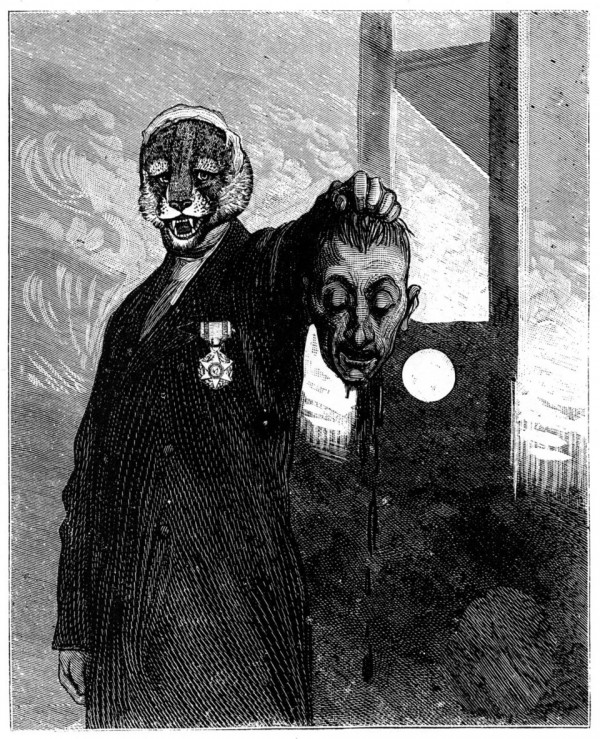
Max Ernst’s surrealist ‘graphic novel’, Une semaine de bonté:

The 184 collages of Une semaine de bonté [A Week of Kindness] were created during the summer of 1933 while Max Ernst was staying at Vigoleno, in northern Italy. The artist took his inspiration from wood engravings, published in popular illustrated novels, natural science journals or 19th century sales catalogues. With infinite care, he cut out the images that interested him and assembled them with such precision as to bring his collage technique to a level of incomparable perfection. Without seeing the original illustrations, it is difficult to work out where Max Ernst intervened.