Literature

Invisible yet enduring

MurnaneArchive

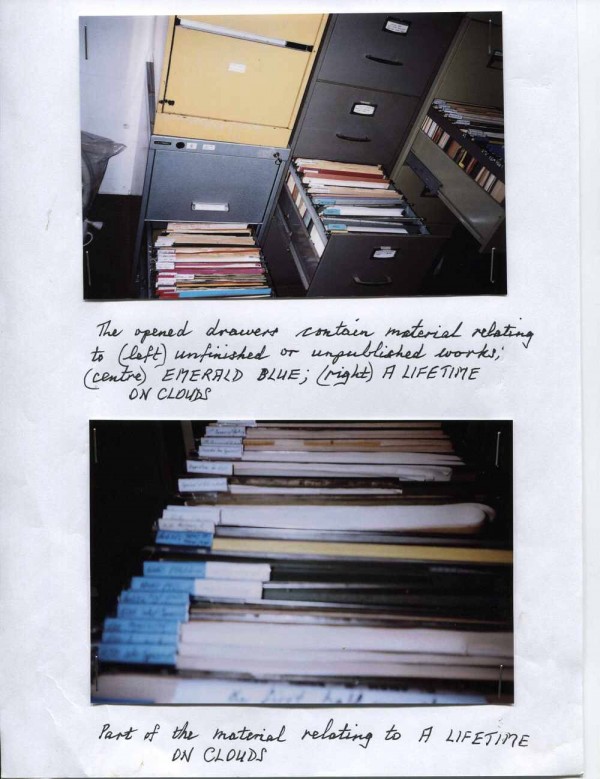
Music & Literature magazine present the ‘Three Archives of Gerald Murnane.’

Murnane has for decades accumulated an impressive collection of literary, personal, and creative manuscripts, including his legendary Antipodean Archive, founded in 1985, which contains an expansive Henry Darger-like fictive universe of horseracing, romantic obsession, and overlapping imaginary realms. Murnane has stated that these archives will not be made public until after his death, but here we are given a glimpse into his many worlds. Revered in his home country and deemed “a genius on the level of Beckett” by Teju Cole, Murnane is regularly rumored as a candidate for the Nobel Prize.

Margins of the city

Baudelaire

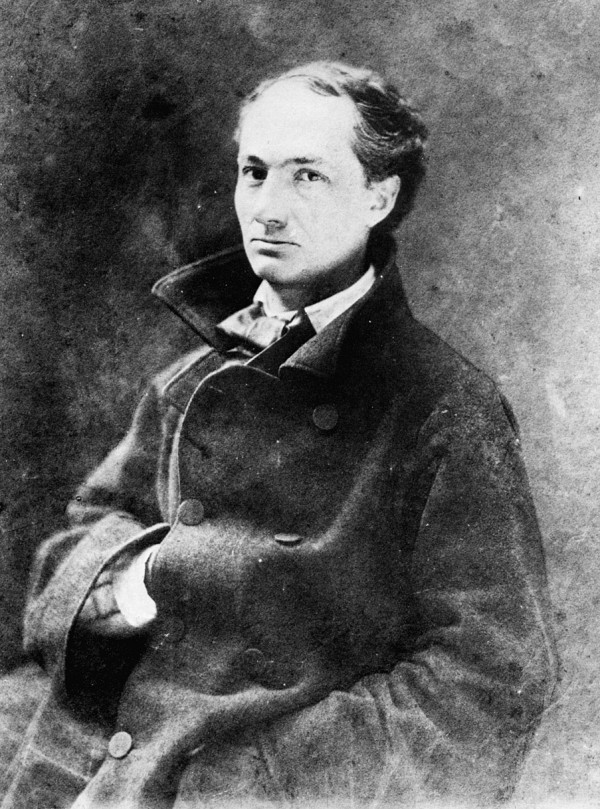
‘Baudelaire, Benjamin and the Birth of the Flâneur’ by Bobby Seal.

It is, therefore, clear that Baudelaire established a tradition that moved through the early modernists, to the Surrealists and on to the Situationists. As part of the latter movement, Guy Debord developed the notions of the dérive and the ‘spectacle’. A dérive (in English ‘drift’) is the means by which ‘psycho-geographies’ are achieved. A drift is an unplanned walk, usually through a city or marginal area, and a psycho-geography involves the walker creating a mental map of the city which, “depends on the walker ‘seeing’ and being drawn into events, situations and images by an abandonment to wholly unanticipated attraction.” (Chris Jenks (ed), ‘Visual Culture’)

Apology for apparent plagiarism. Sources of literary variety.

SamuelJohnson

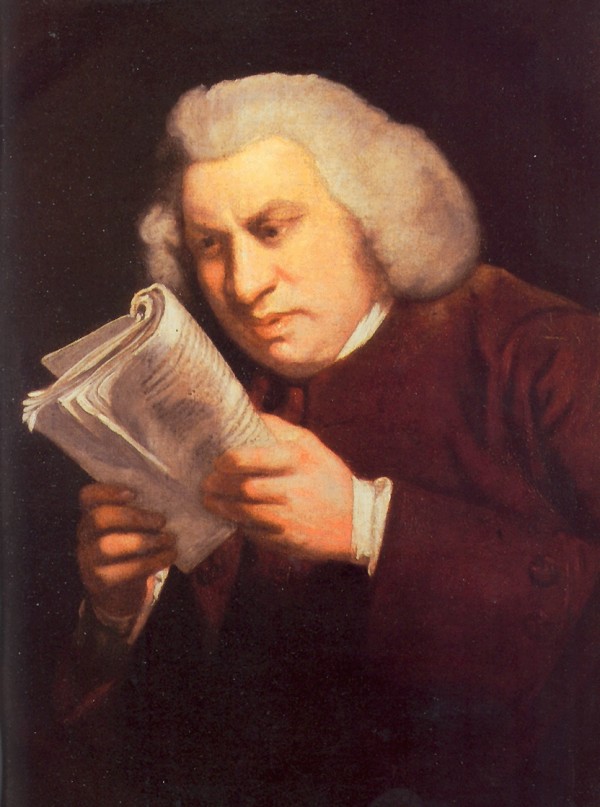
By Samuel Johnson.

Dulcique animos novitate tenebo. OVID. Met. iv. 284.

And with sweet novelty your soul detain.

It is often charged upon writers, that with all their pretensions to genius and discoveries, they do little more than copy one another; and that compositions obtruded upon the world with the pomp of novelty, contain only tedious repetitions of common sentiments, or at best exhibit a transposition of known images, and give a new appearance to truth only by some slight difference of dress and decoration.

The allegation of resemblance between authors is indisputably true; but the charge of plagiarism, which is raised upon it, is not to be allowed with equal readiness. A coincidence of sentiment may easily happen without any communication, since there are many occasions in which all reasonable men will nearly think alike. Writers of all ages have had the same sentiments, because they have in all ages had the same objects of speculation; the interests and passions, the virtues and vices of mankind, have been diversified in different times, only by unessential and casual varieties: and we must, therefore, expect in the works of all those who attempt to describe them, such a likeness as we find in the pictures of the same person drawn in different periods of his life.

It is necessary, therefore, that before an author be charged with plagiarism, one of the most reproachful, though, perhaps, not the most atrocious of literary crimes, the subject on which he treats should be carefully considered. We do not wonder, that historians, relating the same facts, agree in their narration; or that authors, delivering the elements of science, advance the same theorems, and lay down the same definitions: yet it is not wholly without use to mankind, that books are multiplied, and that different authors lay out their labours on the same subject; for there will always be some reason why one should on particular occasions, or to particular persons, be preferable to another; some will be clear where others are obscure, some will please by their style and others by their method, some by their embellishments and others by their simplicity, some by closeness and others by diffusion.

Laughter in the dark

KevinBarry

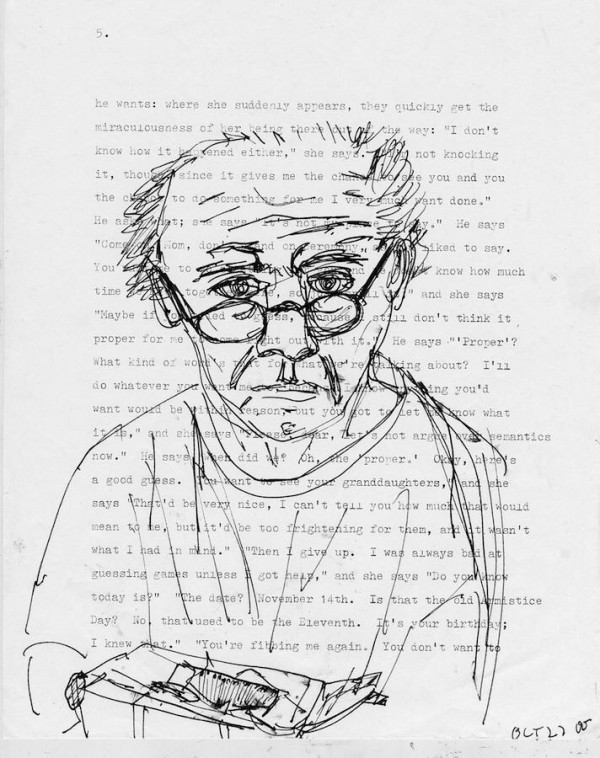
Kevin Barry on the Paris Review blog.

For a long time I was trying to be the next great Jewish American writer. You know, the next Saul Bellow or Philip Roth. This was in Cork city, Ireland. As a pale ginger twenty-something. It wasn’t working out all that well, but I do think you have to write out your influences.

I’ve never agreed with this idea that a writer “finds his voice” and then just sticks with it and drones on in that voice for forty years. That sounds like death to me. I tend to let the story dictate the style. Back then, I let my idea of what a great writer sounds like dictate my style. I wrote these great sententious sentences, clause after clause after clause, under a black belly of fucking cloud, and I’d end up thinking, “What is this? Who wrote this? Who is this guy?” It certainly wasn’t me.

[Via @nemoloris]