Literature

Life & empathy

WilliamVollmann

Newsweek interview the mighty William Vollmann.

If William T. Vollmann ever wins the Nobel Prize in Literature – as many speculate he will – he knows exactly what he will do with the $1.1 million pot the Swedes attach to the award. “It will be fun to give some to prostitutes,” he says, sitting on his futon, chuckling, a half-empty bottle of pretty good bourbon between us.

Alternative Ulster

ForrestReid

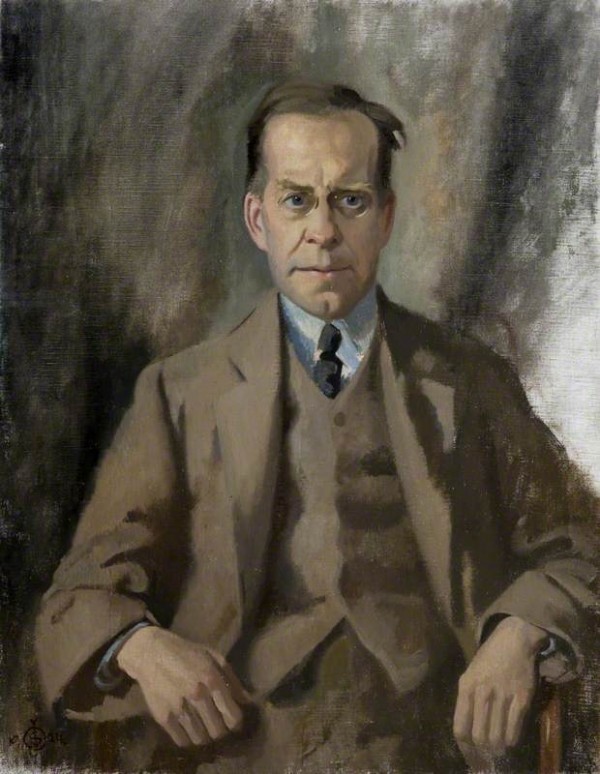
Forrest Reid, the ‘Marcel Proust of Ormiston Crescent’.

The twentieth century literature of northern Ireland was substantially and understandably dominated by one subject matter, namely the formal invention in 1922 of ‘Northern Ireland’, and the various forceful consequences of same. For that reason it has perhaps been too easy to hold a writer such as Forrest Reid (1875-1947) in a marginal regard. And yet this is a character to whom E.M. Forster once referred as ‘the most important man in Belfast.’

Reid’s published writing life straddled the partition of Ireland, and so to some extent he may have been rather overlooked in a melee; but more importantly he was a man out of time. Though in a sense he never left Belfast (other than for his studies at Cambridge) and made home for most his life at 13 Ormiston Crescent, his inner universe was intensely fired by the spirit and aesthetics of ancient Greece, and through his mind’s eye he transformed the landscape of Ulster into a sort of Arcadia.

A dissatisfaction

TimParks

Tim Parks is trapped inside the novel.

I wonder how many people share the experience described by David Shields in Reality Hunger, of tackling some large novel, a work essentially conventional in its structure and brand of realism, that weaves together the lives of its characters over a number of years, and simply feeling that the whole exercise has become largely irrelevant. Shields doesn’t present his remarks as a criticism of writers — the name he mentions is Jonathan Franzen — pursuing the tradition of the long realistic novel. Rather, he suggests it is a change in himself, something he believes has been brought about by the utterly changed nature of contemporary life. He considers the variety of electronic media — the proliferation and abbreviation of all forms of messages, the circumstances created by the ever more rapid transit and greater abundance of information, the emergence of a powerful virtual world that becomes more real to us all the time — and he concludes that given this way of life it is hard for the traditional kind of novel to hold our attention. He then looks at a variety of texts that, unlike the traditional novel, weld together chunks of “reality,” pieces of documentary taken from elsewhere, quotations, fragments, provocations, moments of lyricism, and melodrama, perhaps from film or television, newspapers or websites, to create an entirely different reading experience.

Reframing art

DavidShields

David Shields on originality (what else) in The White Review.

Originally, feathers evolved to retain heat; later, they were repurposed for a means of flight. No one ever accuses the descendants of ancient birds of plagiarism for taking heat-retaining feathers and modifying them into wings for flight. In our current system, the original feathers would be copyrighted, and upstart birds would get sued for stealing the feathers for a different use. Almost all famous discoveries (by Darwin, Edison, Einstein, et al.) were not lightning-bolt epiphanies but were built slowly over time and heavily dependent on the intellectual superstructure of what had come before them. E.g., the commonplace book was popular among English intellectuals in the seventeenth-nineteenth centuries. These notebooks were a depository for thoughts and quotes and were usually categorised by topic. Enquire Within Upon Everything, a commercially successful parody of the commonplace book, was published in London in 1890. There’s no such thing as originality. Invention and innovation grow out of networks of people and ideas. All life on earth (and by extension, technology) is built upon appropriation and reuse of the pre-existing.

The anti-canon

DaniilKharms

Influx Press have a nice feature on their blog, The Anti-Canon, a “collection of short essays focusing on writers less well known, positioned outside of the literary mainstream or simply deserving of more attention”. A little like Writers No One Reads, another series after our own hearts. The brilliant Daniil Kharms makes Influx’s list.

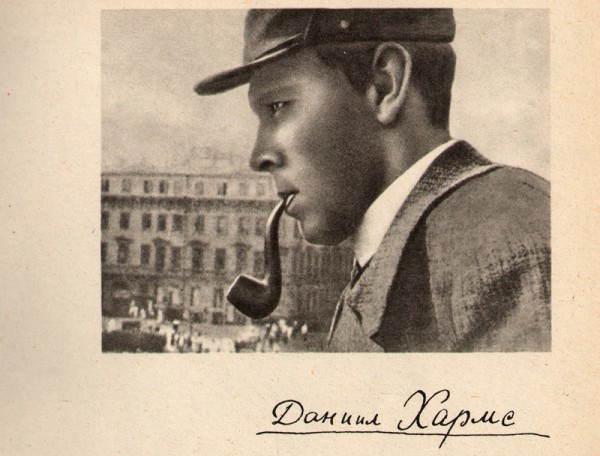
A few months before 36 year old outlaw writer Daniil Kharms starves to death in a psychiatric prison in 1942, a German bomb hits a block of flats during the siege of Leningrad. One side of the block is destroyed. On the other side, windows implode. Inside one of those shattered apartments. Kharms’ second wife, Marina Malich and philosopher Yakuc Drukin frantically gather up his papers and notebooks. These fragments floating through the bomb blasted air are his collected works. They’re what’s left of him.