Blog

The reality of the street
LeFlaneur

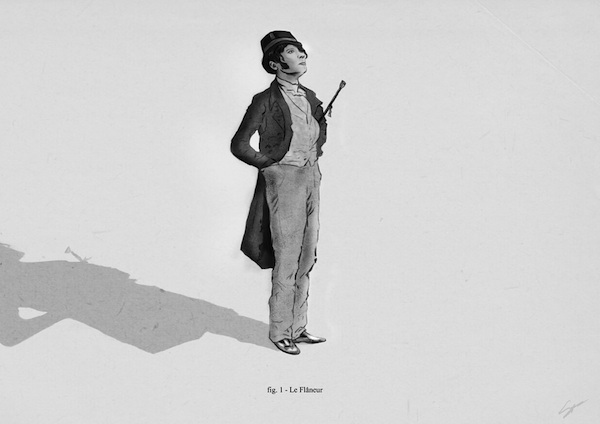
The revolutionary act of urban walking.

There was a whole band of urban ramblers exploring the insalubrious and unheralded districts of London during the interwar years. In books such as Gordon S Maxwell’s The Fringe of London, Thomas Burke’s The Outer Circle and James Bone’s The London Perambulator, the previously overlooked suburban hinterland of the city was treated with the same reverence as more conventional heritage sites. The workaday city was celebrated as a land rich in legend and wonder. In the same period, George Orwell was undertaking his politicised tramps around London and into the Kent countryside to experience the hardships endured by the homeless and destitute; then he walked his way from Coventry to Wigan Pier, chronicling the “distressed areas” of the north.

Yet it was a bunch of Parisian gadabouts who turned this damp-tweed form of subversive schlepping into a codified art. For members of the Situationist International (SI), such drifts were fact-finding missions for the transformation of urban living and society in general. The walks were recast as dérives and the findings formed the new pseudo-social science of psychogeography. The intent was overtly revolutionary. Radicalism was not cloaked in the guise of a walking guide; the SI’s ambulatory studies of the Paris suburbs were “reconnaissance missions” for the revolution that was to come – and it very nearly did in May 1968.

[Image]
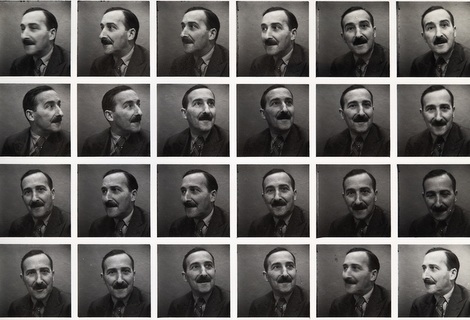
Encounter at the crossroads of Europe

StefanZweig

Will Stone, translator of Stefan Zweig‘s Nietzsche [a gorse read of 2013], on Zweig and Emile Verhaeren.

In Berlin, apart from his studies and bohemian indulgences, Zweig sought a more expansive freedom in literary terms, and caught the bug of translation. He began to explore further afield, even translating poets such as Keats and Yeats and producing with other translators a collection of Verlaine’s poetry to which he added a critically acclaimed introduction. But all the time he was moving closer to Belgium, drawn by the rich crop of its home grown artists and writers who seemed to integrate their works in fresh and creatively productive ways. So in the summer break of 1902, long anticipating a visit to the ‘little land between the languages’, Zweig made his move.

[..]

The vital importance of Zweig’s meeting with Verhaeren in relation to his ensuing career as a writer, emissary of humanism and key proponent for the higher ideal of a Europe of cultural unity, cannot be underestimated. The contrast between Verhaeren’s openness, curiosity, vitality, not to mention the explicit visionary credentials he held, and the self conscious dandified Viennese poetry circles Zweig had moved within was extreme. It was if Zweig himself had suddenly been released from a reserve of pampered elites into the rawness and unpredictability of the wild and could finally breathe real air, taste real food and appreciate the creative potential of risk and unpredictability. In Verhaeren’s verses he saw bold new vistas opening up which seemed to strike a necessary chord with the rapidly transforming epoch, as the fabled ‘golden age of security’, guarded by the Hapsburg realm unceremoniously gave way to something far more restless, ominous and uncertain.

Show not tell

HighRise

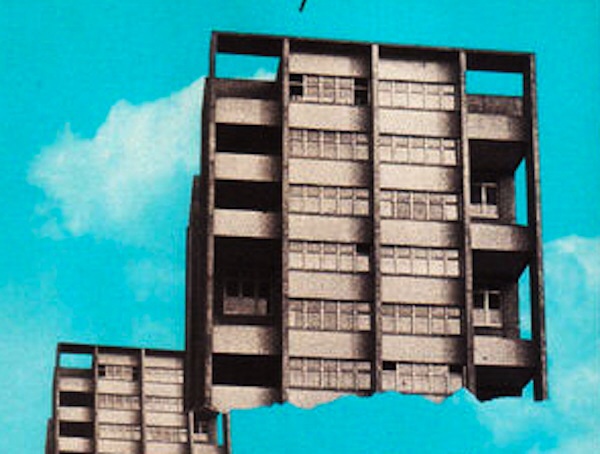
Calum Marsh’s Notes on adapting J.G. Ballard for Paris Review.

When a literary work is adapted as a film, the specificity of the art must be translated: it may be about the same thing, but, to paraphrase Roger Ebert, how it’s about what it’s about needs to be reconceived. Now, a variety of screenwriters and directors have sought to realize a film version of High-Rise since its publication in 1975, including Paul Mayersberg, Nicolas Roeg, and, much more recently, Canadian filmmaker Vincenzo Natali, whose take came perhaps the closest to fruition. Only now has it finally seemed underway: British director Ben Wheatley, the radical auteur responsible for Kill List and Sightseers, has been confirmed as the project’s new lead and is set to begin shooting in early 2014. We will learn soon enough how he has dealt with the issues of translation.

The prospect is doubtless intimidating. Ballard’s prose resists translation: its hard to account for its almost poetic sense of rhythm and meter, for the elasticity of the sentences, for the density of the page. What are you going to do, shoot a writhing mass of ex-bourgeois maniacs in the corridors of an oversized apartment? How painfully literal. Certainly the images are there in the work—the garbage-piled elevator shafts, the smears of blood and graffiti along the inner hallway walls, the half-drained pool with its acrid-yellow water. This is stuff you can film. But what about the pungency of the air, the encroaching lunacy of the mind? What about that crucial later: How do you begin a film with something as succinctly remarkable as the novel’s first sentence, without recourse to the artlessness of a solitary title card?

Reads of 2013

AbandonedLibrary

Exciting that three of the novels on our list are a) written by Irish authors (Alan Cunningham, Eimear McBride, Philip Terry), b) experimental, c) published by independent publishers. A pity they’re exiled. (And we have more to say on this in our editorial in issue one.) Anyway… our favourite novels and non-fiction reads of the year.