
stomaselli

Superfluous men

AtochaCover

Narcissus and Ego: Poets Try the Novel, interesting look at Dan Beachy-Quick‘s An Impenetrable Screen of Purest Sky and Ben Lerner‘s Leaving the Atocha Station.

Ruthlessly autobiographical and dialectical on the role of art, we might think we’re witnessing a new form: a shrewd arbitrage of the Confessional Poem smuggled into the Novel. But, of course, the novelists have been here before. [Lerner’s narrator] Adam Gordon calls to mind André Gide’s marvelously puckish 1894 novella Marshlands, whose unnamed narrator never misses an opportunity to announce the writing of his own novel “Marshlands” (the story of a “man who lies down”). He carefully crafts empty maxims to deploy while mocking and being mocked by literary society, models himself (at least in his selection of breakfast) after the Lake-Poets much as Daniel would Melville or Adam would Ashbery, and all the way throughout . . . accomplishes very little writing of “Marshlands.”
The Night

TheNight

By Brendan Byrne.


“Language is the poisoned air we live in. In spite of all our jokers, words don’t play; and in spite of Breton, they don’t make love except in dreams. Words work, to the profit of the dominant organisation of life.”

The above quote is from the polemic ‘All the King’s Men’ which appeared in Internationale Situationniste #8 in 1963, three years after Michèle Bernstein’s novel All the King’s Horses. The titles are not taken from the same source. The editors of Internationale Situationniste (of whom Bernstein was one) explicitly reference Humpty-Dumpty, whereas her novel takes its title from a traditional French ballad. In ‘Aux Marches du Palais’, the coupling of a royal and a commoner is imagined, creating what Greil Marcus called “as deep and singular an image of revolution as there was ever been”. This different ethic of love fuels the shared plot (such as it is) of All the Kings Horses and its successor The Night (1961): a married couple’s seduction and abandonment of two young lovers. All the King’s Horses tells the story in an irony on the style of Françoise Sagan’s Bonjour Tristesse. The Night mimics Alain Robbe-Grillet’s nouveau roman, fracturing the more or less undisturbed chronology of its predecessor.

Echoes of Mondrian

LynchPylon

Sean O’Hagan reviews The Americans are Coming, Warhol, Burroughs and Lynch at the Photographers’ Gallery.

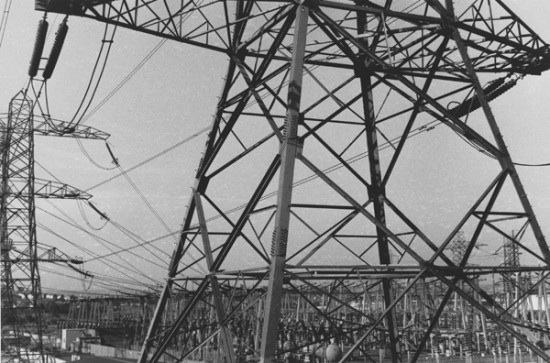
In this triumvirate of maverick American talents, David Lynch emerges as the most old-fashioned, that is to say, formally consistent photographer. In The Factory Photographs he is represented by his pictures of the single subject of the title – deserted industrial spaces. (He also photographs nudes and forlorn snowmen.) His black-and-white photographs of decaying buildings are really black and grey. Taken as a whole they make a kind of elegy to industrialism and, in their ominous darkness, possess a unified aesthetic that sets him apart from the other two artists.

Introducing: Darran Anderson

darrananderson

Editors’ note: As we head towards publication, we thought we would introduce our contributors.

Fantômas, Lolita, cargo cults, poèts maudits, who better to tell a Serge Gainsbourg story than Darran Anderson? Whether it’s essays on memento mori, imaginary cities, the night, the Shipping Forecast or the literary nasty, if Darran keeps writing ’em, we’ll continue to read. He is, as Lee Rourke says, one of our brightest minds. His essay for gorse is on the moderns and their literary and artistic antedcedents.