stomaselli

Making Something of It

PatrickKavanagh

By Alan Cunningham.

When I read The Green Fool by Patrick Kavanagh, I read a book that – had I also been born in 1904 – I think I, too, could have written, exactly as it is; a book, however, that if I were to write it now would be a somewhat different book, being much more concise.

I believe in the possibility of exact replication because many of the thoughts expressed by Kavanagh in his autobiographical work – a very good book, by the way, but also a very flawed one – reflect attitudes and modes of behaviour that have changed little in Ireland in the intervening years, irrespective of external changes. I, and others, are evidence of this, as are events that have happened to me in that country.

Je est un autre

Babel

The January issue of The White Review is a translation issue, edited by Daniel Medin, and features

Dada serious

HannahHoch

Brian Dillon on Hannah Höch, ‘art’s original punk.’

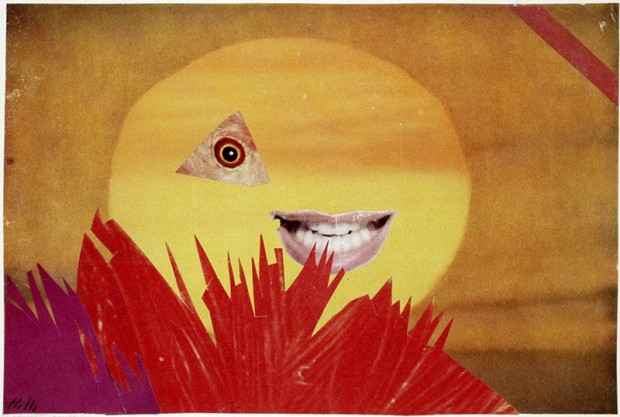
Cut With the Kitchen Knife is Höch’s best-known work, though it’s something of an anomaly – not least in its scale – and it does not appear in the Whitechapel Gallery‘s new exhibition. Höch claimed she had hit on the technique of photomontage while on a Baltic holiday with the married Hausmann in 1918; having come across mocked-up photos sent home by German soldiers, in which the young men’s heads were superimposed on pictures of musketeers, they realised the power of cut-and-paste to “alienate” images. This origin tale is slightly misleading, however, because since 1916 Höch had been working for the Berlin publisher Ullstein, producing embroidery and lace designs for such periodicals as Die Dame and Die Praktische Berlinerin. She was probably already familiar with the kinds of collage that an expanding print media practised with photographs. Höch worked on these handicraft magazines for a decade, and even wrote a manifesto of sorts for modern embroidery, in which she enjoined Weimar-era women to “develop a feeling for abstract forms”.

Various Assumptions

001-henri-cartier-bresson-theredlist

The Still Lives of the Artists by Kevin Breathnach.


[PDF]

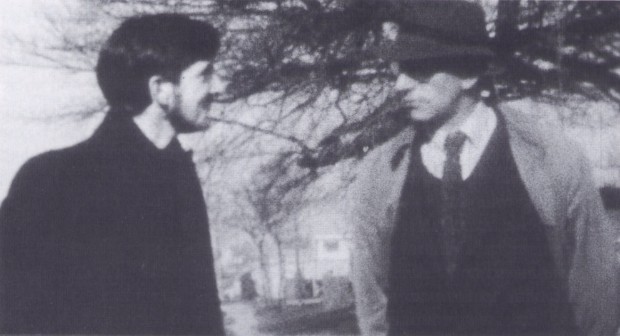
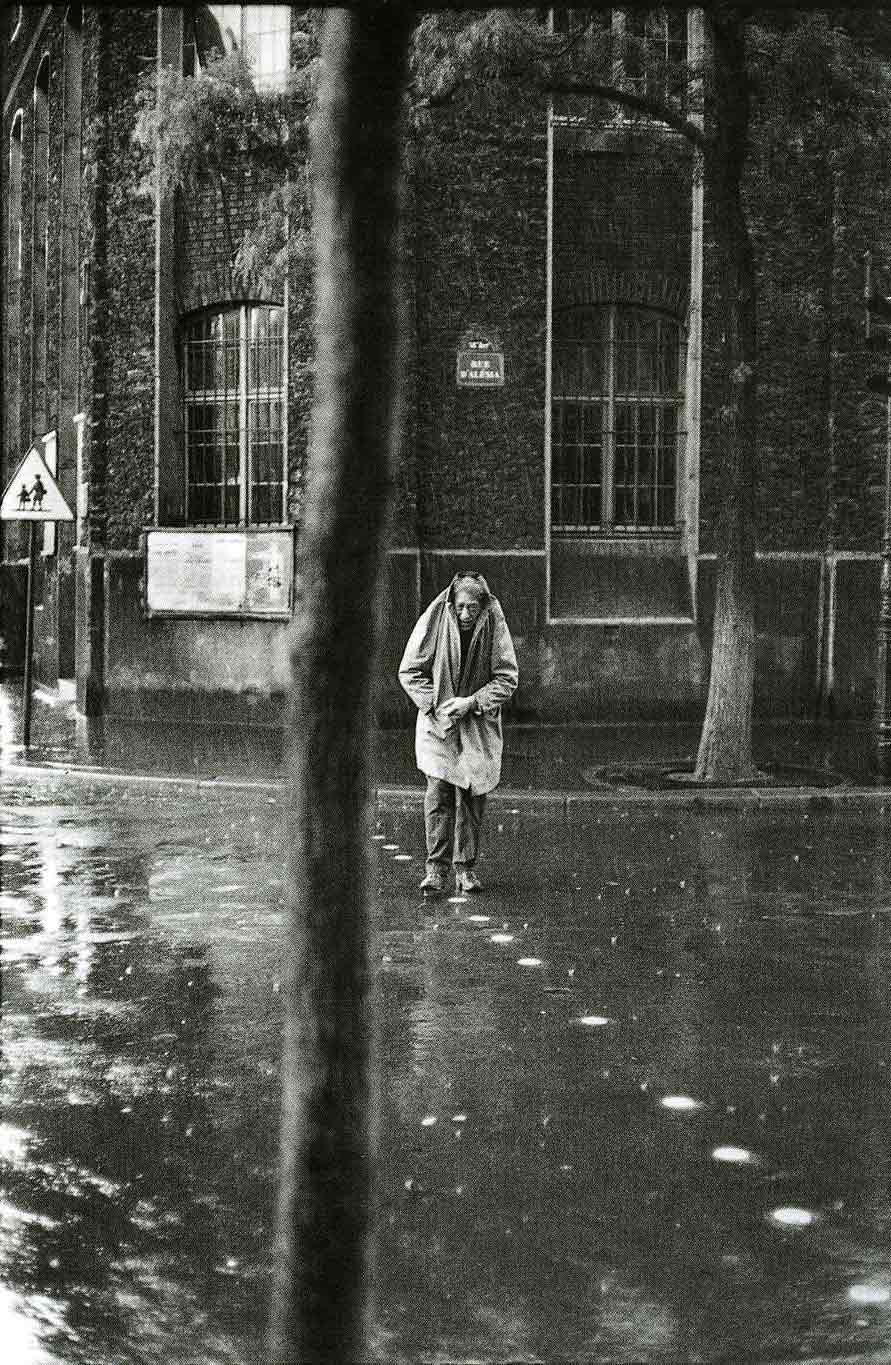
I write this essay every year and, every year, I see it morph to suit the quote that kicked it off a little better. ‘Every artist’s work changes when he dies,’ says John Berger in his essay on Giacometti. ‘And finally no one remembers what the work was like when he was alive.’ This was never as I remembered it, never as I needed it to be. What I remembered Berger saying was that death changes not the work of every artist, but the image. Berger makes his claim immediately after some remarks on Giacometti’s demeanour in a famous photograph showing him crossing the road in the rain, his coat pulled over his head for shelter. Berger says he looks ‘like a monk,’ but to me the photograph casts Giacometti closer to one of his own sculptures. It was an understandable slip of memory, in any case, and it caused no trouble in the end. I simply included the quote as I’d initially remembered it, and as usual nobody noticed. Still, I think there’s something instructive about this particular misremembering. The work of John Berger had been changed, after all, and John Berger had not died. What I know had happened to him, however, might in some way account for his essay’s curious reticence about the person who took the photograph in question. In 1994, about fifteen years before my memory experienced his work as somehow altered, John Berger had his portrait taken by Henri Cartier-Bresson. The occasion is described in Photocopies. Mid-conversation, the photographer turns away from Berger. Then quickly he returns. ‘He has picked up his camera and is looking at what is around me again. This time he clicks.’ For some photographers, collaboration with the sitter is of central importance; to Cartier-Bresson it was anathema. To be his subject was to feel one’s subjectivity dissolve. It has now been ten years since he died. Isn’t it odd? His work does not seem to have changed at all.

The Run of the Streets

Queneau

By Karl Whitney.

[PDF]

I close the door of the apartment and duck through the corridors, under the low wooden beams, down the stairs past the post boxes on which the names of the inhabitants of the building are printed; one of them reads ‘Bastard’.

I press the button to release the heavy front door and I’m out on the street. Suddenly, Parisian life teems around you, like the volume has just been turned up. Like you’ve just been underwater and have quickly surfaced.

I set off at pace along the street, dodging past the tables of the small cafés that adjoin our building. I pass the small community garden on the corner, cross the small side street and run in the direction of the traffic lights at the top of the street. Trousseau, Charles Delezcluse, Charonne: these are the three streets that I’ve so far intersected on my run from the apartment in the 11th Arrondissement.

On 3rd December 1851, at the southern end of rue Trousseau, Alphonse Baudin, a deputy in the French Assembly, was shot dead on a barricade that had been erected after the previous day’s seizure of power by Louis Napoleon. On the wall of a building nearby, a plaque whose text is etched in gold paint commemorates his death.

Paris is a city upon which so many layers of history can be read that sometimes it can seem not a living and breathing city at all, but rather an archive of past events and people and ideas that have been lived out on such a grand scale that, for those who live there, it can surely appear difficult to do anything new or worthwhile.