stomaselli

Close to the Edit

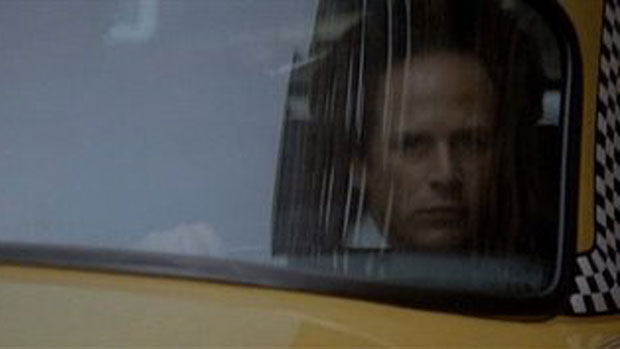
badtiming

The films of Nicolas Roeg by Richard Kovitch.

[PDF]

‘The motion picture is still such a magical and mysterious combination of reality, art, science and the supernatural—as well as the gateway to the nature of Time, and perhaps even the first clue in solving the puzzle of what we’re doing here on this world.’– Nicolas Roeg

Born the 15th August 1928, director Nicolas Roeg has been alive almost as long as cinema has mixed sound and vision to such hypnotic effect. His career began amidst the austere gloom of post-war Britain. ‘In those days getting a job at a studio was like getting a job in a factory,’ he notes in his memoir The World Is Ever Changing. This was an era before film schools and theory influenced the medium. Work fixated upon the industrial; the application of machinery and technical knowledge to document stories. But it was from learning this trade, by immersing himself in the industry’s conventions, that Roeg would come to challenge the methods of working, and from there ‘the art grew.’

Roeg’s formative years were spent at De Lane Lea on Wardour Street before he moved to MGM at Borehamwood. He was originally a camera operator, then a focus puller, then cinematographer. He worked with the greats and observed them, always learning, always inquisitive. Roger Corman’s Masque Of Red Death, David Lean’s Lawrence Of Arabia, François Truffaut’s Fahrenheit 451 — ‘it was a magical time, mysterious’ and underlined to Roeg how much more there is to film than merely writing, theatre and photography. ‘Oscars are won with 2 or 3 shots,’ he told the Guardian in 2005. It is emotion that burns on the memory: the human face, the panoramic view, the instant when image and sound combine to create moments of triumph or defeat. Roeg extrapolates on this: ‘An image makes more emotional sense than words because it helps the imagination on its way visually rather than just by interpretation.’ Films show, they don’t tell, even if—in the case of Roeg—what they show is elusive and illusory.
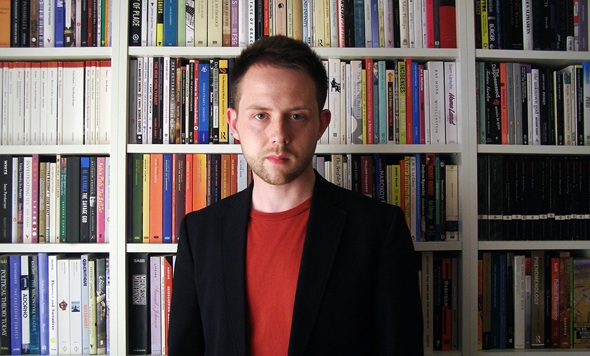
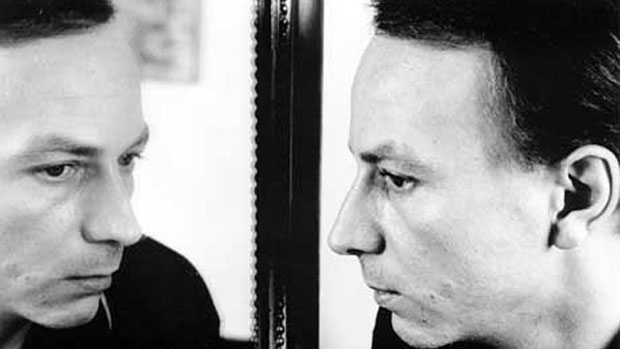
Introducing: David Winters

DavidWinters

Editors’ note: As we head towards publication, we thought we would introduce our contributors.

David Winters is an invigorating literary critic (“criticism will be renewed by being disembedded, deligitimized, deinstitutionalized”), who has lead discussions on Gordon Lish (“it’s no overstatement to say that Lish is to the second half of the 20th century what Gertrude Stein was to the first”) and modernism. In an interview with HTMLGiant David said,

“Perhaps every novel contains a “theory” of the novel, as part of its cache of tacit knowledge. A novel has an understanding of itself, whether it knows it or not…“The novel” as a grand project: the idea fills me with nervous exhaustion. What I can say with confidence is that I’m less and less interested in that sort of novel. I’d rather read a book that wants to do away with itself. Deep down I closely identify with literature, but I also compulsively want to kill literature.”

For gorse, David interviews literary experimenter Evan Lavender-Smith.

Appetite For Depletion

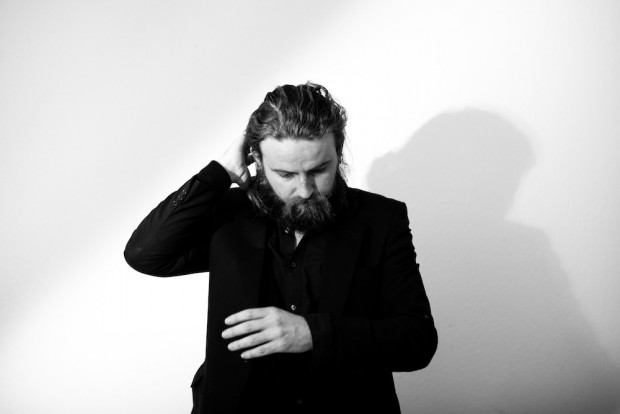
houellebecqrd

Thoughts on Michel Houellebecq by Rob Doyle.

[PDF]

Let us be clear: Michel Houellebecq wants to bring you down. If you are happy in your life, he wants to spoil it. Not out of particularly noble motivations: his agenda is propelled by spite, hostility, resentment. He is a nihilist — not in the pure, passive sense (if that were the case, we would never have heard from him) but actively, virulently. He is engaged with the world to the extent that he wants to undermine it. He is not on the side of ‘good’ or of improvement, or of humanity. He is wretched and he wants to infect you — and all the West — with his misery. Because he happens to possess a genius for literary seduction and an authentically harrowing vision, there is every danger that he will succeed. This, to my mind, is what makes him the most fascinating of living novelists.

Objectively speaking, Michel Houellebecq probably should not be read. (I say that as an enthralled reader of everything he has ever published.) In a more robust, self-assured civilisation, Houellebecq and his ideas would be firmly suppressed, or he would simply be ignored by an indifferent public. Houellebecq knows this; the fact that he exists is part of his indictment. His success is his accusation.

Houellebecq drains all the cheer out of life, because cheer requires illusion, ignorance and hypocrisy — all of which are healthy traits in any virile psychic economy, as Nietzsche understood. Again, Houellebecq knows this, having read his Nietzsche. But Houellebecq refuses us our vital errors, driven as he is by (more or less conscious) malice and resentment. In a sense, I wish I had never read him; though of course this is not really true — I read him raptly, and he inflicted exactly the kind of wound I was longing for.

After Nietzsche had first read Schopenhauer, his friends said he was no longer the man he had once been, so enervated was he by his predecessor’s overwhelming pessimism. It took Nietzsche many years to claw his way back, to overcome Schopenhauer and posit new, anti-Schopenhauerian values. It would take a formidable force of will to overcome Houellebecq, once you have allowed him to whisper his insinuations in your ear. It may even be that, if you do have ears for Houellebecq, then you are already beyond help.

The Magnet Has a Soul & Everything Is Water

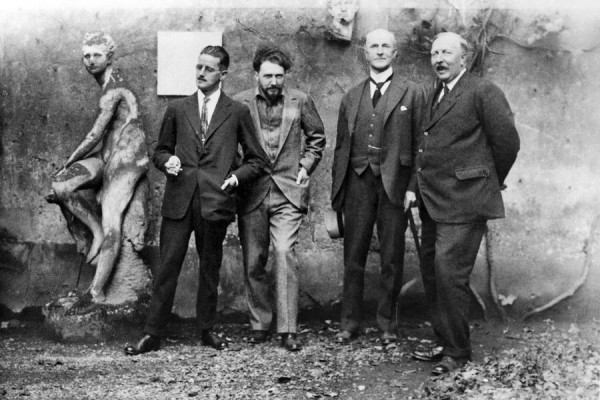
JoycePound

How modernism is ancient by Darran Anderson.

[PDF]

‘On or about December 1910,’ Virginia Woolf wrote in her essay Mr Bennett and Mrs Brown, ‘human character changed.’ Homo modernus had emerged, like some rough but eloquent beast, in the depths of an English winter. Woolf’s perspective of the birth of modernism was subjective of course and the date has been continually disputed. In his recent study, Constellation of Genius, Kevin Jackson selected as late as 1922 as ‘Modernism Year One.’ For many, T.S. Eliot included, the industrialised threshing of an entire generation of European youths by their parents in the Great War of 1914 to 1918 fragmented the old order and created something different, either as a presence or an absence. This was supported by the appearance of dada in the wartime refuge of Zurich; being a wilfully deranged but, to paraphrase R.D. Laing, rational reaction to an insane world. Yet there were identifiable modernists before this – Apollinaire, Marinetti, Jarry – to say nothing of the forerunners of modernism: Nietzsche, Ibsen, Jean-Pierre Brisset, Conrad, Strindberg, Lautréamont, Rimbaud. What becomes clear the further back you go, is this process does not effectively come to a standstill. There is no absolute point of beginning. As a way of looking at the world and recreating it, modernism, meta-modernism, postmodernism and deconstructionism have always been with us, long before we gave them such ludicrous names.

The timing of modernism is important because of the vacuum it’s perceived to have left when it dissipated (a likewise disputed period between the World Wars). With commendable intentions, the more adventurous writers today bemoan the fall of the movement and the retreat of much of the literary community into pseudo-Victorian ways of approaching the novel. They discuss its loss with a hint of grief and the desire that it will come again, resurrected to save the day, like millenarian peasants awaiting the Messiah or Jacobites the Young Pretender. Who will save us from ourselves? A more compelling view is that modernism was not entirely obliterated in a collective loss of nerve but survived abroad, in isolated pockets, underground, or flourished in science fiction and comic books. Yet when you begin to list the writers who have reputedly kept the spirit of modernism alive, you find their number is colossal, making up the more critically acclaimed sections of contemporary literature. Indeed, the loss of confidence is not restricted to mainstream novelists. The admirable question posed by Gabriel JosipoviciWhat Ever Happened to Modernism? – has been answered not by polemics but by fiction. It is still there when we search for it.

Modernism didn’t disappear because it never definitively appeared. It has been part of our character since at least the earliest identifiable story, the Epic of Gilgamesh, and the trail only runs cold there because the archaeology of the written word does. It’s not a question of colonising the past and extending modernism back through the centuries. Rather, it is to merely detect what’s already there when we look back.

Introducing: John Holten

JohnHolten

Editors’ note: As we head towards publication, we thought we would introduce our contributors.

John Holten is an Irish writer and artist based in Berlin, and runs the ‘fictional’ publishing house Broken Dimanche Press, an avant-garde press that takes its queue from Yves Klein‘s one-day newspaper, Dimanche-Le Journal d’un Seul Jour. John is the author of The Readymades, a novel that documents a fictional network of Serbian artists known as the LGB group (“in defiance of the 21st century’s obsession with the virtual, LGB strives to produce an art of the everyday — having experienced the everyday in its murderous aspect”). We’re pleased to run an extract from Oslo, Norway, a roman fleuve on “love and the creation of fictions.”