stomaselli

The boss

image

Richard Skinner on Satie:

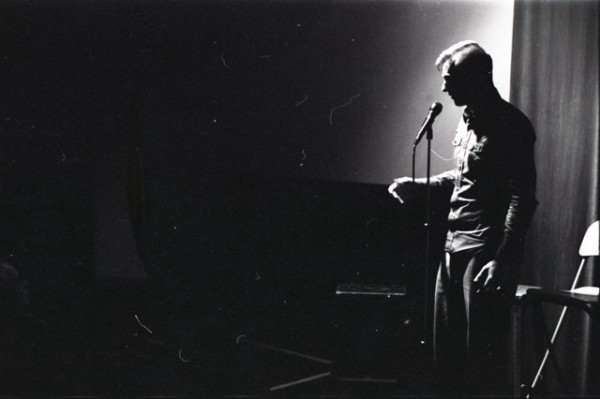
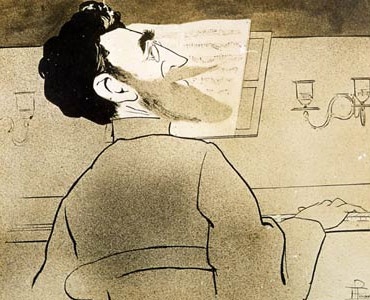
The final key to Satie’s work is the idea of Repetition. In 1949, John Cage went to Paris to find out more about Satie’s music (apart from a few cognoscenti, Satie’s work was unknown at that time) and one of the pieces he discovered was entitled Vexations. Played through once, this rather innocuous piece made up of 36 diminished and augmented chords lasts no more than 2-3 minutes, but Satie had set a trap for the performer by saying that the piece should be played 840 times in succession. To do this, he said, ‘it would be advisable to prepare oneself beforehand, in the deepest silence, by serious immobilities’. If you follow Satie’s instructions, the average time it takes to perform the piece is about 24 hours, which is longer than it would take to perform all his other pieces of music put together.

It might seem like a joke, but Satie was deadly serious and the repetitive nature of all his pieces raises interesting questions about the function of boredom in art. Satie said that ‘boredom is deep and mysterious’. Of Vexations, Cage said, ‘The music first becomes so familiar that it seems extremely offensive and objectionable. But after a while the mind slowly becomes incapable of taking further offence, and a very strange euphoric acceptance and enjoyment begins to set in … It is only boring at first. After a while the euphoria begins to intensify.’

Space maker

PaulKlee

In the London Review of Books, T.J. Clark reviews Paul Klee at Tate.

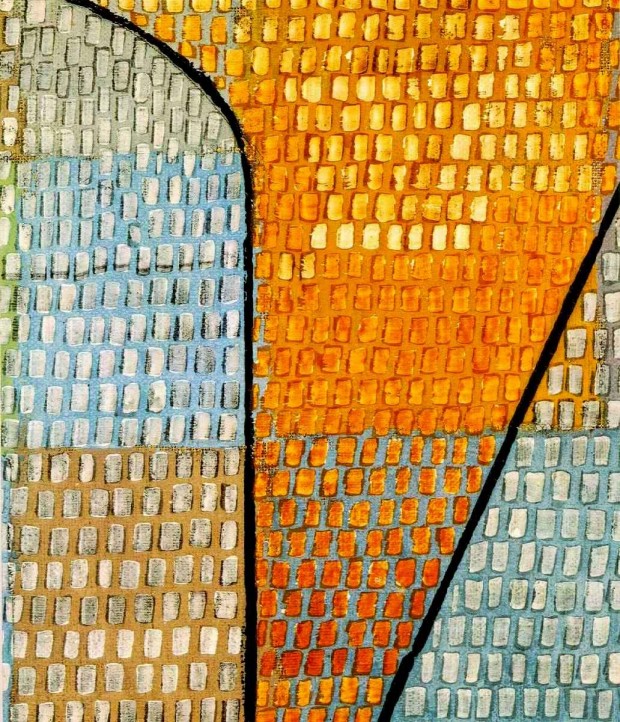
Cubism remained a matrix. Klee realised that others had bent it to their purposes: Mondrian’s sensibility, after all, was as remote from Picasso’s as Klee’s own. In and around 1923 Klee found a way to make even the tight cubist grid do the work he wanted – by inserting enough brighter and lighter squares into the chequerboard, each of them beckoning the eye through the foreground into depth, so that the surface came to look as if it were a kind of transparency ‘really’ hung across a glimpsed infinity on the other side. Once he had the basic idea he often returned to it, varying the size of the squares, the regularity of the grid, the translucency of the veil. The series of glittering watercolours and oils done in 1931 and 1932, using stippled dots or tiny oilpaint tesserae – paintings like Castle Garden or Semi-Circle with Angular Features – strikes me as the high point of this kind of space-making. The Whole Is Dimming (Das Ganze Dämmernd), reads the title of one of them, summing up the vision.

Introducing: Julie Reverb

juliereverb

Editors’ note: As we head towards publication, we thought we would introduce our contributors.

Julie Reverb started writing ‘while in bed with a hangover in Spring 2012.’ She says she writes ‘intensely about nothing,’ purely for ‘punches and cadence.’ We believe her. You will too if you follow the trail of her work through some of the best writing venues out there: ‘Pound It’ in Squawk Back, ‘You’ve Got Something on Your Face’ in Calamari Press’ Sleeping Fish, ‘The Bad News First’ in 3:AM Magazine. It’s staggering to think she’s only been at it for a few years.

Introducing: SJ Fowler

Zemanta Related  Thumbnail

Editors’ note: As we head towards publication, we thought we would introduce our contributors.

SJ Fowler has been exploring the boundaries of European poetry in his Maintenant series, a project that takes its name from pugilist, poet, hoaxer and nephew of Oscar Wilde, Arthur Cravan. It’s an astonishing project, one that has profiled the work of almost 100 contemporary poets, placing the likes of Frédéric Forte, Tadeusz Różewicz and George Szirtes alongside Ann Cotten, Luna Miguel, Holly Pester and Ragnhildur Jóhanns. Says Fowler,

“For years I was completely isolated in my reading too…and as such I was in a bubble, didn’t have the chance to develop any sense of prejudice against poetry in translation, or avant garde work, as somehow otherly. That’s perhaps why I read this kind of work alongside poetry that might be better known in this country in equal measure.”

A lost soul

ArthurCravan

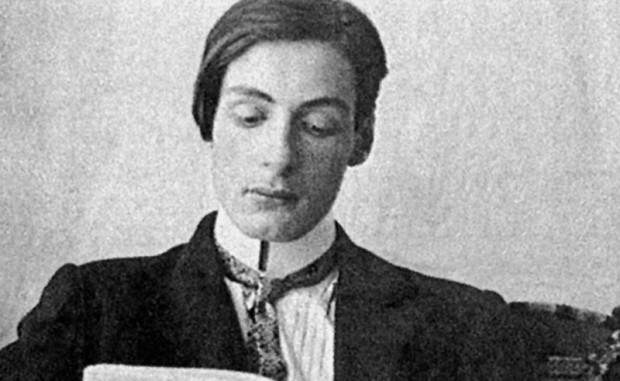
Arthur Cravan writes to Mina Loy from Mexico City, December 10, 1917:

Since leaving I have become tremendously pure, and if I manage to survive I’m thinking of becoming a saint. But I don’t think I will survive. If you don’t get any more letters you’ll know that I’m dead or else that I’ve gone mad. If you can’t console me I’d rather disappear from the world of the senses or at least of the intelligence. I can no longer see a star or read a book without being filled with horror. I have almost no strength left for writing to you. and if I knew I was doing it in vain, I would kill myself in five minutes. All I do is think about suicide. As you have probably never been in this state, you can’t understand. If you had suffered half as much as I do, you would fly to my side. Listen, Mona, I would almost ask you to lie. The idea of death fills me with horror, so even if you couldn’t come, could you give me the sweet illusion that I will see you again? I could never bear the truth. Madness terrifies me more than death. My brain can’t manage to repair the losses, and the only thing I really grasp is that I am lost. Wire me for God’s sake. This is the Christmas of a lost soul. It will be the New Year of a man who is condemned to death…. Mina, I can’t believe, I don’t dare believe, that you will abandon me. If you come, I swear to you on my eternal soul that I will never cause you pain and that your life will be sweeter than that of any other woman. Forget the past. I was full of lies, but now I only want to live for the truth.

From the New Yorker.