
stomaselli

Wormhole Sculptor

driveinjj

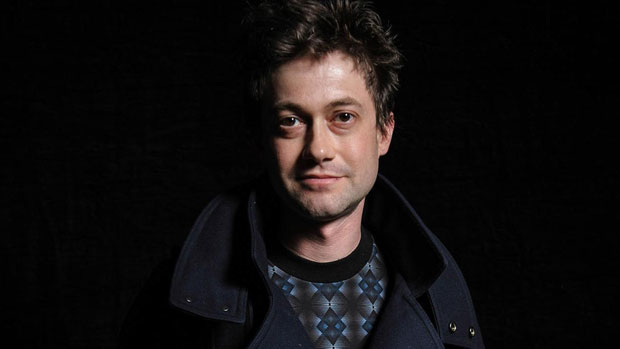
Jesse Jones interviewed by David Gavan.

David Gavan: Perhaps in keeping with the idea of a postmodern ‘global village’, your work has a very international feel. You have said that you would prefer to be considered as an artist, rather than an Irish artist. But you must have been affected by the singular aspects of Ireland. That it’s a country that was not colonised by the Romans (despite having their religion), that has not had an industrial revolution (except in the north of Ireland), but does have a capital whose denizens sometimes seem determined to forget Ireland’s agricultural background, has been colonised by both England and Roman Catholicism and – perhaps most importantly – is gorging itself at the postmodern pick ’n’ mix sweetie stall, without first having digested modernity. That said, it is strange that Ireland is seen by some as a parochial backwater, when you think the premier modernist is James Joyce and the premier proto-postmodernist is Flann O’Brien.

Jesse Jones: Joyce wrote outside of Ireland as well, so that’s partly the answer to your question. Did Joyce privilege being in Ireland and his citizenship within Ireland, or did he privilege being a writer, first and foremost? I think he privileged being a writer, even though so much of his writing was an examination of the relationship between self and nationality. Joyce is really interesting because he addresses the idea of identity, and I think that defining people in terms of nationality is a really reductive response to being in this world. Artistically, I find the idea of nationality too cumbersome, awkward and inelegant. It doesn’t sit well with the expansive or experimental approach to being in the world that writers and artists endeavour to have. So, when I say that my being considered as an Irish artist is not my first priority, that’s not to negate my being Irish for any political reasons; it’s just that being an artist is so much more important to me. I guess that I’m reminded that I’m Irish because I make so many works outside of Ireland, which inevitably brings me into contact with other cultures.

Introducing: Karl Whitney

karlwhitney

Editors’ note: As we head towards publication, we thought we would introduce our contributors.

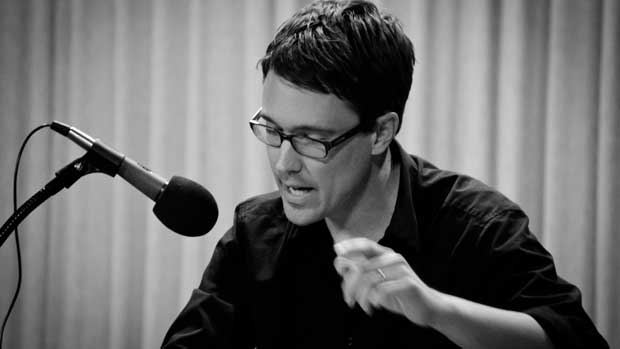
For our money, Karl Whitney is Dublin’s best psychogeographer since James Joyce. Witness, his narrative walks ’round the boundaries of Tallaght, and his search for the hidden waters of the Liberties and St. Patrick’s well, the lost tramways, and Bram Stoker and Ireland’s ghost estates. Karl doesn’t confine himself to Ireland, though. He has written on the Situationists, Parisian streetscapes, and Oulipean Georges Perec. For gorse, Karl runs the Paris of fellow Oulipean Raymond Queneau:

Whereas Queneau’s Paris — the area in which he lived and the place he wrote most about — was located to the west of the city, I was drawn to the east. That’s where the apartment I shared with my girlfriend was, that’s where the library I worked in stood. So when I ran out the door of my apartment building and thought about Queneau’s Paris, I was translating it from west to east: to the storefront petrol stations and pizza joints of the area near place de la Nation. But, as I ran, I was also thinking about the way, in the early 1930s, when work was hard to come by for Queneau as for many others, he picked up a job writing a tiny column for a newspaper. Each day, three, often cryptic, questions about Paris would turn up in L’Intransigent under the heading ‘Connaissez-vous Paris?’ The following day, the answers would be printed below three more questions, and so on. Queneau wrote the column between November 1936 and October 1938, after which he got a job at the publisher Gallimard as a reader.

Speeds & Shapes of Consciousness

evanlavendersmith
Evan Lavender-Smith interviewed by David Winters.

[PDF]

On the strength of two short books – each slim enough to be read in a single sitting — Evan Lavender-Smith has established himself as one of America’s leading literary artists: a writer whose work reconfigures the relations between fact and fiction, form and content, writing and reading. Not only this, but Lavender-Smith speaks as much to philosophers as to lovers of literature. His books have been copiously praised by some of the most pioneering voices in contemporary fiction (Gary Lutz, Brian Evenson, Michael Martone) and by prominent scholars of continental thought and critical theory (Clare Colebrook, John Mullarkey, and Ian Buchanan, among others). Lavender-Smith’s first book, From Old Notebooks (BlazeVox, 2010; Dzanc, 2012) presents a constellation of self-reflexive fragments — scattered thoughts on writing, thinking, and the comic chaos of family life — that combine to create a vivid, living literary meditation, reminiscent of Montaigne and David Markson. His second book, Avatar (Six Gallery Press, 2011) treads strikingly different territory: recalling Bernhard and the late works of Beckett, this grief-crazed monologue gives us a glimpse of life at its limit, stranded in space, left only with tears, stray strands of hair, and degraded memories for company. Taken together, these two texts testify to a level of intellectual and aesthetic adventurousness rarely seen in recent literature. Evan and I corresponded by email throughout September 2013, in a conversation that ranged from the legacy of modernism to the vital importance of style and form for both literary and philosophical writing.

+++

David Winters: Forgive me for beginning with some fairly broad brushstrokes. Reading both of your books together, my first instinct is to try to make comparisons between the two. This may be a mistake on my part (I’m not sure why two texts’ shared authorship should automatically make them candidates for comparison) but perhaps there are commonalities. For instance, both books present what we could call the “rhythm of thought”. But each book is driven by a different rhythm—most rudimentarily, that of the fragment on the one hand, and the unbroken monologue on the other. So, to start with, I’m interested in how you conceive of the relationship between these two modes, and the capacity of each to reflect (or rather, produce?) “thought”…

Evan Lavender-Smith: It seems that my own thought often proceeds in one of those two ways, either in the mode of the concise fragment (e.g. “Need eggs”) or in the mode of the excessive interior monologue (e.g. “Eggs eggs Walmart today tomorrow eggs must buy them don’t forget the eggs …”). I’ve spent a lot of time trying to really think about the way I think, but I’m still not sure that I have a very good handle on it. I listen to myself think; invariably I forget what I’ve heard, so I return to the most basic questions. Do I think in words? If so, what type of syntax is involved? These are the simple, first-order questions; it gets trickier when the relationship between thought and writing is introduced. How is (or isn’t) language/writing commensurable to thought? What might a formalist representation of thought look like, in contrast to a realist representation of thought? That last question has particularly interested me, the possibility of non-realist literary forms reflecting the hidden or forgotten rhythms and syntaxes of thought. As to your point about the literary mode producing rather than merely reflecting thought, yes, of course, at a certain point it’s six of one, half a dozen of the other: I perceive my words and sentences feeding off other words and sentences in the same way I perceive my thoughts feeding off other thoughts; I intuit a certain immanence about content, as determined by form, just as I perceive a certain immanence about thought, as determined by the body. I don’t know that the language’s self-generative ability is any more marked in the fragmentary mode as it is in the monologic mode; it seems to be a fundamental feature of both modes, or of any mode in which I write, including the rambling mode of the answer to the interview question.

Variations on a theme

adamthirlwell

Adam Thirlwell interviewed by Susan Tomaselli.

[PDF]

In the British literary establishment (and let’s face it, named Granta Best Young Novelist not once but twice is ‘establishment’), Adam Thirlwell is something of a Trojan horse: ‘Good novelists (or, maybe more honestly, the novelists I like) are often not just avant-garde in terms of technique; they are morally avant-garde as well.’ His novels – Politics (2003), The Escape (2009) – use Milan Kundera and Philip Roth as templates, and feature digressions on Osip Mandelstam, the Bauhaus and Saul Bellow, to name but a few. With their narratorial interventions and other unconventional stylistic quirks, they flaunt the rules of sexual comedies. But Thirlwell is a master of turning ideas upside down and inside out, no more so than in his novella Kapow! (2012), a response to the Arab Spring that uses typography, fold-out pages and wordplay to mimic the noisy confusion of events as they emerged on Twitter and YouTube. It is the missing link between Tristram Shandy and the Lissitzky designed For the Voice. Thirlwell has always been interested in the international and the experimental, and his Miss Herbert (2007), named for an English governess who may or may not have been Flaubert’s mistress, and may or may not have helped him translate Madame Bovary, is his understanding of the possibilities of translation through a miniature history of the novel (or, an ‘anti-novel, with novelists as characters,’ as he puts it). It’s a theme he continues to explore in Multiples (2013), a ‘project for multiplying novels in any language,’ inspired, partly, by Augusto Monterroso.

Bitter satirist

GulliversTravels

‘Pox and the city: the complex life of Jonathan Swift’ at New Statesman.

What about Swift? Gulliver’s Travels can be read in many different ways: as local satire (on particular political circumstances and scientific fashions), as parody of the kind of pseudo-realistic travel narrative represented by Crusoe, as mockery of utopian visions, as the misanthropic ravings of a furious old man. Three hundred years on, scholars and students still debate whether or not Swift the narrator is directing his irony against Gulliver or the talking horses known as Houyhnhnms (all you need to do is whinny). Or both. The fact the name Gulliver contains the word “gull” – someone who is easily deceived – is a starting point.

We cannot begin to give decent answers to the questions raised by Gulliver’s Travels without a sense of its place in Jonathan Swift’s long and complicated life, which lasted from 1667 (probably) to 1745 (by which time he had already written his own epitaph, the magnificently self-knowing and wittily self-deprecatory Verses on the Death of Dr Swift). The Harvard professor Leo Damrosch’s new biography is to be warmly welcomed. Up until now, the serious student of Swift has had to rely on Irvin Ehrenpreis’s three-volume epic treatment, completed half a century ago. As Damrosch shows in a crisp and exemplary prologue, Ehrenpreis, for all his command of minutiae, was unnecessarily dismissive of certain items of contemporary gossip about Swift and over-confident in his psychoanalytic interpretations.